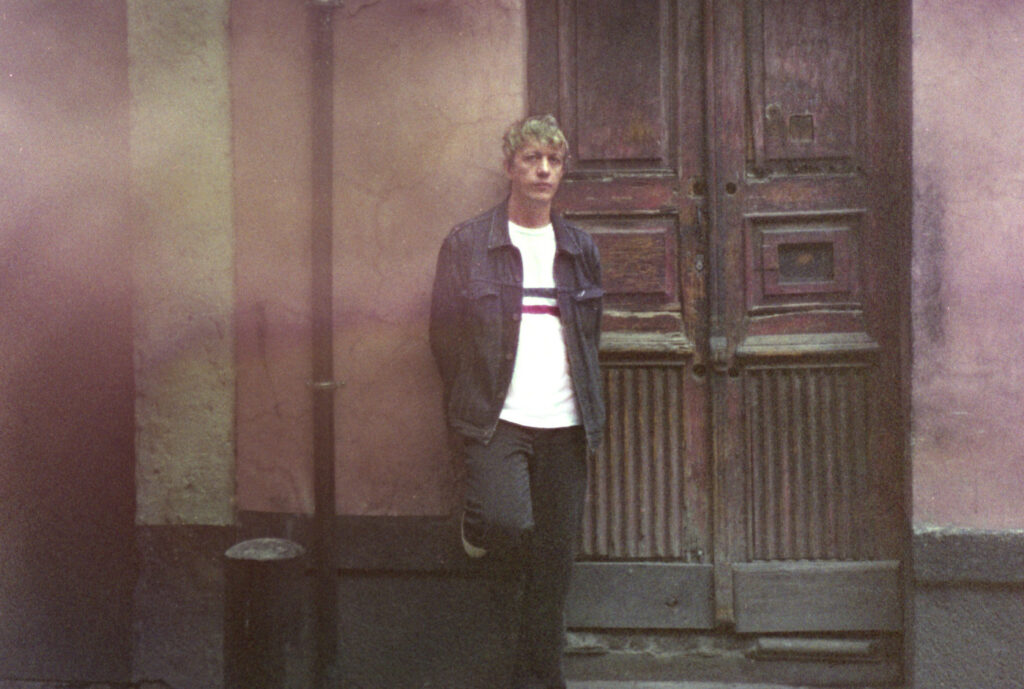
Ahead of his first show in Zagreb, we spoke with Steve Gunn about his recent residency in Latvia, the role of collaboration, and his ongoing search for a more open, intuitive approach to songwriting.
I’d love to start with your residency in Latvia, which seems central to Music for Writers: what drew you to doing a residency in the first place, and how did that experience shape the way you worked?
My desire to do a residency somewhere new came from wanting to immerse myself in a different landscape and see where that might take me musically. Latvia interested me right away, and it ended up becoming central to Music for Writers.
It was my first residency, based in Sabile, with access to a recording studio. I was excited to be in an environment that encouraged both focus and immersion in nature, and I wanted the music to directly reflect that experience. The structure of the residency aligned closely with what I had in mind, which led me to apply.
I experienced a full seasonal shift while I was there—lots of walking, reflection, and getting to know the culture and landscape. I’m very grateful to artist Ojars Feldbergs for creating that space within his sculpture park, Pedvale.
You’ve collaborated with a wide range of artists. Is there something collaboration has taught you that you couldn’t have learned working solo?
I think collaboration has taught me to listen more deeply and let go of certain fears around improvisation. There’s a kind of language exchange that happens in collaborative music, and being open to that can be rewarding in a myriad of ways. Of course, it depends on finding the right people.
What still excites your curiosity as a musician these days and are there any sounds or ideas you feel like you’re still chasing?
I’m always open to taking risks musically, even if it leads somewhere awkward—there’s usually something to learn from that. I’m not drawn to perfection or virtuosity, and being open has led to most of what I come up with. A lot of the time I end up in places musically that I didn’t intend, and that’s part of what keeps it engaging for me.
What’s the most useful mistake you’ve made in your career – something that changed the way you work or think about music?
One of the most useful mistakes I made was trying to meet external expectations with my music, and eventually learning to let that go. That mindset can be really draining. Letting things unfold more naturally changed a lot for me. At the same time, I try to stay grounded in simply playing every day and staying connected to the instrument—even if it’s not feeling right or pushing beyond any understanding.
You’ve mentioned wanting to keep your songs from becoming too personal, but at the same time, any kind of art involves exposing something of yourself. How do you navigate that tension? And has that boundary ever shifted for you over time?
My main interest in songwriting is reaching for something more universal, rather than focusing on my personal story. I don’t feel a strong need to center the “me/mine” in that way.
That boundary has shifted over time, and I’ve grown more comfortable working in abstraction—finding another way, or what some might call a “third way.” The songs are still reflective, of course, but I want to leave space for listeners to find their own meaning in them, without me being too fixed in the center. There is freedom in that.
When you look back at your records now, is there one that feels like a turning point for you – where something shifted?
I think Daylight Daylight feels like a turning point in my songwriting. I felt very open while making it, and working with James Elkington helped give the record a natural shape.
It didn’t feel rushed or forced, and I wasn’t overly focused on the outcome. Because of that, the final result felt almost surprising to me—like something new had emerged from that process.
Is there something specific that makes a room feel “right” for your kind of music, even if you’ve never been there before?
Connection is the most important thing. Listening is important too. I can usually sense whether I have the audience’s attention—it’s very palpable from the stage.
When that connection is there, I feel more comfortable letting go and seeing where the music leads.
Have you ever been in “our” part of Europe and what kind of show are you hoping to build for the night at Močvara?
It’ll be my first time, and I’m really looking forward to being there—I’ve wanted to visit for a long time.
For the show, I’ll be playing a mix of old and new songs, along with some more spontaneous elements. I’m hoping it all comes together in a way that connects with people. And I always really appreciate when people make the effort to come out and listen.
Razgovarala: Anita Ulovec (Volontiram u Močvari)